Esports Odds Explained for LoL Players: Moneyline, Spreads, Totals, Props, and Live Odds
By LOLValue Team · February 24, 2026
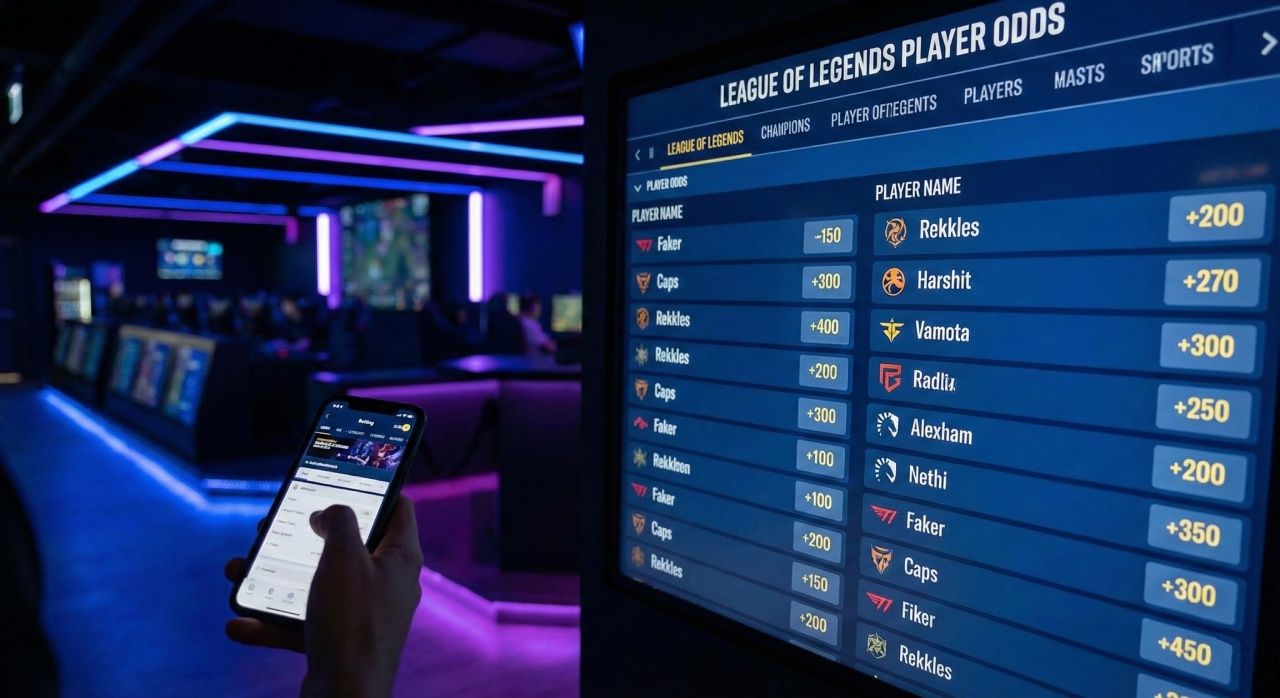
Esports odds show up everywhere now: match previews, co-stream banter, even the way fans explain a clean 2-0 victory. Still, some fans find that the terminology used only makes it harder to understand what is going on. Most confusion is not a math problem. It is a label problem. Fans hear “odds” and assume it means “who is better,” but the market label is really asking a narrower question about one outcome, under one set of conditions.
The Shortcut That Makes Esports Odds Click
Here is the shortcut that clears the fog: the price tells you how likely, and the market name tells you what that likelihood applies to. In League of Legends, format matters and timing matters. The same two teams can have several prices that are all reasonable because they measure different slices of the match, not the match as a whole.
To lock the labels in, it helps to see the same matchup shown with multiple market types in one place, in the kind of layout fans actually encounter outside of explainers. On https://www.luckyrebel.la, the sportsbook section uses many terms that you will see in esports, such as moneyline, point spread, totals, props, and live bets. Reading these helps you train your eye on the label before you react to the number.
Start by translating each label into a more descriptive phrase: moneyline is who wins the match or series; spread is who wins by how many maps, rounds, or another listed unit; totals is how many maps, kills, or objectives; props is which event happens first or who hits a stat line. Live bets are those same questions re-priced mid-match. After you define the labels, exploring Lucky Rebel may help you understand the concepts better.
Lucky Rebel has become a popular stop-off for players who love to step outside the rules and play in an alternative format, one that is designed to support their preferences. Because it couples this rebellious approach with clear guidance and good support, it’s able to help newbies to the betting market find both a niche that suits them, and all the information they require to get going - win-win.
The 3-Part Decoder: Label, Unit, and Clock
Before you react to any odds, name three things. Label: What market are we in? Unit: What is being counted? Clock: When is the market being priced (pre-match or live)? This matters in esports because the match itself creates information. Draft direction, lane matchups, tempo, and objective setups can all change what feels likely without changing who is better in a vacuum.
Core Markets in Esports: Moneyline, Spread, Totals, and Props
Moneyline is the overall winner market. In a League best-of series, it is “who wins the series.” A moneyline favorite can be favored for reasons viewers recognize, like draft scaling versus early tempo, and how reliably a team converts a lead into objectives. A practical translation is “which team is more likely to still have a winning position after 25 minutes of decisions?”
Spread is a handicap market, so you are measuring margin, not just the winner. In a best-of-3, the unit is often maps, where a -1.5 type line implies a required victory of 2-0. In other esports, the unit can be rounds. Some markets use a handicap tied to a match stat instead of maps.
One quick check: if the unit is maps, a 2-1 win can still fail a -1.5 spread, even though the favorite won the series outright.
Totals are “how many,” not “who.” Over under can refer to total maps, total kills, or another match stat. Name what is being counted before you interpret the line, and totals stop feeling abstract.
Props are narrower events, like first objective, player totals, or team milestones. They often reflect style and game plan more than they reflect the final winner, so treat them as their own questions.
Why Live Odds Change During a Match
Live odds change because new information arrives while the match is progressing. In League, that information is visible: gold leads, wave state, objective timers, vision control, and how each composition scales. If a team drafts hard scaling and survives the early game, the odds of who will win might look quite different from how they seemed at the start. If a team opens the map with early towers, that changes the path to the next objective, not just the scoreboard.
To understand live movement without getting overwhelmed, pick a signal and track it across a few matches. Watch how a 2,000 gold lead at 10 minutes behaves in different comps, or how a dragon soul threat compresses decision time around vision and positioning. Patterns show up fast when you look for the same trigger, instead of chasing every swing.
Once you read odds as labeled questions, the jargon stops feeling confusing. You stop treating odds like a verdict, and you start treating them like vocabulary for what the match is measuring right now.
More from the LOLValue blog
LoL account value calculator · LoL skins database · LoL MMR checker · Wasted on LoL · Riot Points to USD
LoLValue isn't endorsed by Riot Games and doesn't reflect the views or opinions of Riot Games or anyone officially involved in producing or managing Riot Games properties. Riot Games, and all associated properties are trademarks or registered trademarks of Riot Games, Inc.