Fortnite in 2026: The Cultural Phenomenon That Changed Gaming Forever
By LOLValue Team · January 21, 2026
Fortnite in 2026: The Phenomenon That Changed Gaming Forever
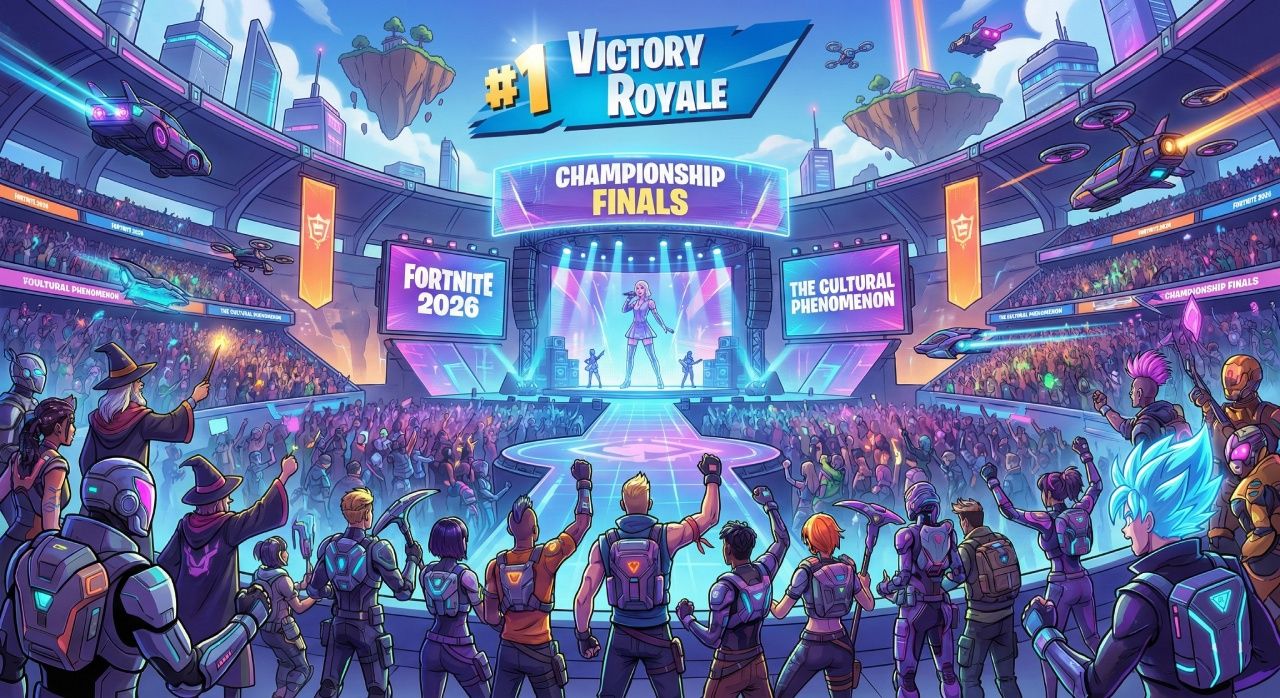
When Epic Games launched Fortnite Battle Royale in 2017, few could have predicted it would evolve into one of the most influential games in history. Nearly a decade later, Fortnite isn't just a game it's a cultural platform, a social space, and a constantly evolving digital universe that transcends traditional gaming boundaries. Here's why Fortnite remains at the forefront of the industry in 2026.
More Than Just a Battle Royale
Yes, Fortnite popularized the battle royale genre for mainstream audiences, but reducing it to "just another BR" misses the bigger picture. The core 100-player fight for Victory Royale remains thrilling, but Fortnite has expanded far beyond that original formula. Creative mode lets players build entire worlds. Party Royale offers social hangout spaces. Limited-time modes constantly experiment with new gameplay concepts.
The building mechanic once Fortnite's most divisive feature remains what separates it from every competitor. The ability to instantly construct cover, gain high ground, or create complex structures mid-combat adds a skill ceiling that rewards creativity and quick thinking. Mastering build battles, editing techniques, and strategic material management transforms good players into great ones.
The Zero Build Revolution
Perhaps the smartest decision Epic made was introducing Zero Build modes. By offering a version without building mechanics, they welcomed players who loved the gunplay and strategy but found the building overwhelming. This wasn't fragmenting the player base, it was acknowledging that different players want different experiences.
Zero Build brought back lapsed players and attracted new ones who'd been intimidated by watching streamers build the Taj Mahal in three seconds. Both modes thrive because they appeal to different skill sets: traditional FPS players can enjoy tactical positioning without worrying about being outbuilt, while building enthusiasts can fully express their mechanical mastery.
Collabs That Break Reality
Fortnite's collaboration game is unmatched in entertainment history. Marvel characters fight alongside DC heroes. Star Wars locations appear next to Dragon Ball arenas. Musicians from different generations share the same stage. Spider-Man can eliminate Darth Vader while John Wick spectates, somehow it all makes sense within Fortnite's reality.
These aren't just cosmetic additions. Major collabs bring entire gameplay experiences: Mythic weapons from Marvel heroes, lightsabers during Star Wars events, special abilities tied to anime characters. Fortnite has become the ultimate crossover universe where intellectual properties collide in ways that would be impossible anywhere else.
The concerts and live events have redefined what games can be. Travis Scott's Astronomical event, Ariana Grande's Rift Tour, and subsequent virtual performances proved that Fortnite is a legitimate venue for digital experiences that millions attend simultaneously. These aren't gimmicks, they're the future of shared entertainment.
The Skin Collection Obsession
Let's be honest: Fortnite's cosmetic system is both its greatest achievement and potentially its most expensive hobby. With thousands of skins released over the years, from exclusive Battle Pass items to rare shop rotations having a stacked locker has become a status symbol in the community.
For players who missed out on iconic skins from earlier seasons or want access to rare cosmetics without waiting for shop rotations, Fortnite accounts with established collections have become sought after. These accounts might feature OG skins from Chapter 1, exclusive collaboration items, or complete Battle Pass collections that are no longer obtainable. For collectors and players who want to stand out in the lobby, having an account with rare cosmetics offers instant credibility and style options that new accounts simply can't access.
The Competitive Scene
Fortnite's competitive ecosystem has matured into one of gaming's most lucrative and exciting scenes. The Fortnite Championship Series (FNCS) showcases the absolute peak of what's possible when world-class players combine building, editing, aim, and game sense. The prize pools remain massive, and the competition fierce.
What makes competitive Fortnite unique is its accessibility. Anyone can compete in tournaments through in-game qualifiers. A teenager playing in their bedroom can potentially qualify for championships with million-dollar prize pools. This democratization of esports has created countless underdog stories and launched professional careers.
The Endless Customization
Fortnite's cosmetic system is legendary. Thousands of skins, back bling, pickaxes, gliders, emotes, and wraps let players express themselves in virtually infinite combinations. Want to be a banana? Done. A futuristic warrior? Easy. A literal car? Why not. The Battle Pass system delivers new cosmetics every season, ensuring there's always something new to unlock.
The emotes deserve special mention. Dancing after eliminations has become Fortnite's signature move, spawning real-world dance trends and countless viral moments. The emote library is enormous, ranging from simple gestures to elaborate choreographed routines. They're communication tools, celebration mechanics, and meme generators all in one.
Creative Mode: A Game Within A Game
Fortnite Creative has evolved into a full-fledged game creation platform. Players have built everything from horror maps to puzzle games to racing circuits to exact replicas of classic games. The tools Epic provides rival some standalone game engines, and the community's creativity knows no bounds.
Some Creative maps have become destinations in their own right, with millions of plays and dedicated communities. Epic even features standout creations, giving talented creators exposure and incentives. It's transformed Fortnite from a game you play into a platform where you create games others play.
The Social Hub
For millions, especially younger players, Fortnite is their primary social space. It's where friends meet up, hang out, and chat while playing. The game's voice chat, party system, and various social modes make it as much a communication platform as PlayStation Network or Discord.
This social dimension is crucial to Fortnite's staying power. Players aren't just logging in for gameplay, they're logging in to see friends. The low-pressure Party Royale mode explicitly embraces this, offering a space to just hang out without combat. Virtual worlds where social interaction happens naturally are the future, and Fortnite figured this out years ago.
Constant Evolution
If you took a break from Fortnite for six months, you'd return to what feels like a different game. New weapons appear while old ones get vaulted. Map locations transform with each season. Mechanics get added, refined, or removed based on community feedback. This constant evolution keeps the game feeling fresh but also means there's always something new to learn.
Epic's willingness to experiment sets them apart. They're not afraid to try wild ideas, quickly iterate based on feedback, and completely overhaul systems that aren't working. This agility in game development is rare and essential to Fortnite's continued relevance.
Why It Matters
Fortnite proved that games could be more than games, they could be platforms for social connection, creative expression, and shared cultural experiences. It demonstrated that free-to-play models could be ethical and successful. It showed that constantly evolving live-service games could maintain quality and player trust over years.
The building mechanics introduced a skill ceiling that's accessible to learn but nearly impossible to master. The collaborations proved that gaming could be the ultimate crossover medium. The live events showed that virtual gatherings could be meaningful and memorable.
More from the LOLValue blog
LoL account value calculator · LoL skins database · LoL MMR checker · Wasted on LoL · Riot Points to USD
LoLValue isn't endorsed by Riot Games and doesn't reflect the views or opinions of Riot Games or anyone officially involved in producing or managing Riot Games properties. Riot Games, and all associated properties are trademarks or registered trademarks of Riot Games, Inc.