Games as the New Social Media: Fortnite, Roblox, and Platforms Where "Playing" Is Just an Excuse to Hang Out
By LOLValue Team · March 26, 2026
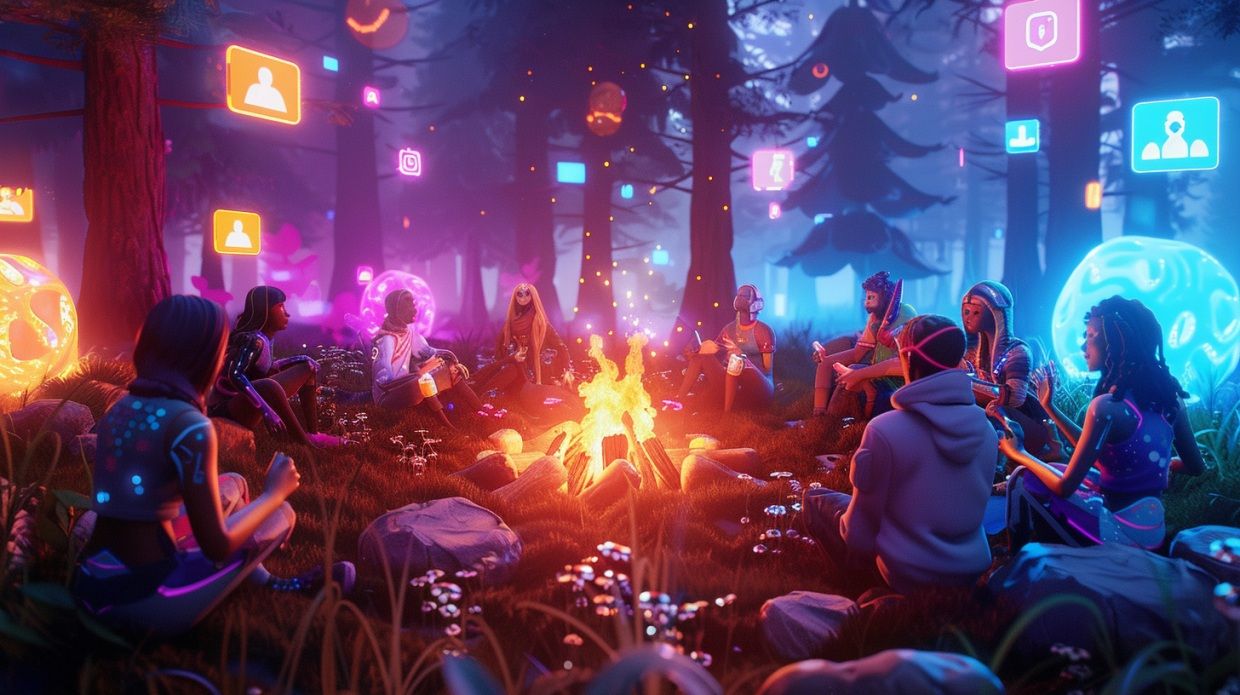
Remember when your parents said you were wasting time playing games? Turns out, you were actually hanging out with friends the whole time. Today's gaming platforms have quietly transformed into digital hangout spots where the game itself is just background noise.
Kids are loading into Fortnite not to win Victory Royales but to chat while fishing or dancing in the lobby. Roblox sessions turn into impromptu fashion shows where nobody actually plays the obstacle course.
This shift is reshaping how an entire generation socializes and traditional social media companies are sweating.
The Death of "Just Gaming"
Gaming used to be straightforward. You loaded up a game, played it, then logged off. Social interaction happened through clunky voice chat or typed messages between matches. The game was always the main event. Not anymore.
Modern gaming platforms blur the lines:
- Players spend hours in creative mode building nothing in particular
- Voice chat conversations continue regardless of what's happening in-game
- Virtual concerts and movie screenings happen inside game clients
- Friend groups meet up in-game even when nobody feels like playing
This behavior is similar to how users explore other digital platforms. For instance, one might check a specialized portal like https://gry-hazardowe-zadarmo.com/kody-promocyjne/ to find a promo code for an online casino to test the waters.
In both cases, the incentive is just a practical step to start the social or interactive experience.
Fortnite exemplifies this perfectly. Epic Games figured out that players would stick around longer if the island became a hangout space rather than just a battle royale map. Party Royale mode removed combat entirely, creating a space where players could just exist together.
The game became the place, not the activity.
Roblox
If Fortnite is a digital playground, Roblox is an entire virtual universe. With millions of user-generated experiences, it functions less like a game and more like a social platform wrapped in game mechanics.
Kids aren't logging into Roblox to master a specific game. They're checking what their friends are doing, hopping between experiences, and mostly just goofing around. The actual gameplay is secondary to the social experience of being together in a shared virtual space.
What makes Roblox a social hub:
- Customizable avatars that serve as digital identity
- Thousands of hangout spaces designed purely for socializing
- In-game economy where trading and shopping become social activities
- Easy creation tools that let friends build experiences together
According to Bloomberg, Roblox users spend an average of 2.6 hours per day on the platform. That's not gaming addiction but social behavior. It's the digital equivalent of hanging out at the mall, which is exactly what teenagers did before smartphones existed.
The platform's design encourages this. Free-to-play access removes barriers to entry, making it easy for anyone to join the community instantly. Once inside, the social connections keep them coming back more than any gameplay loop could.
Discord
Millions of gamers now spend more time in Discord than in actual games. They'll sit in voice channels for hours, occasionally loading up a game but mostly just talking.
Discord started as a gaming communication tool but evolved into something much bigger. Servers organize around interests, communities, and friend groups rather than specific games. People stay connected to dozens of servers, popping in and out like visiting different rooms at a party.
Discord's transformation into social infrastructure:
- Watch parties for movies and shows
- Study groups and homework help channels
- Music listening sessions with shared playlists
- Random voice channels where people just hang out indefinitely
The app essentially recreated the experience of having friends available to talk whenever you want. You can be doing homework, watching Netflix, or playing a completely different game while staying connected to your Discord crew. The barrier between "gaming time" and "social time" has completely dissolved.
Why Traditional Social Media Is Losing
Facebook, Instagram, and Twitter are struggling to keep younger users engaged. The reason isn't complicated - scrolling through curated photo feeds feels passive and performative compared to actually doing things together, even virtual things.
Gaming platforms offer something social media can't: shared experiences and activities. You're not just looking at what your friends did, you're doing things with them in real-time.
The interactions feel genuine because they happen naturally through play rather than through carefully crafted posts.
Gaming platforms win because they provide:
- Real-time interaction instead of asynchronous messaging
- Activities to do together rather than content to consume
- Lower pressure to present a perfect image
- Actual fun mixed with socialization
Meta clearly sees this threat, which explains their massive investment in VR and the metaverse concept. They're trying to recreate what Fortnite and Roblox already achieved - spaces where people naturally gather and hang out.
What This Means for the Future
The line between gaming and social media will keep blurring. Expect more games to add social features that have nothing to do with gameplay. Creative modes, customization options, and hangout spaces will become standard because companies realize keeping players connected matters more than keeping them engaged with core mechanics.
We're heading toward a future where "logging into a game" means the same thing as "hanging out online." For now, if you're wondering where teenagers are spending their time, the answer is simple: they're in-game, probably not actually playing, just hanging out. And that's exactly how they want it.
More from the LOLValue blog
LoL account value calculator · LoL skins database · LoL MMR checker · Wasted on LoL · Riot Points to USD
LoLValue isn't endorsed by Riot Games and doesn't reflect the views or opinions of Riot Games or anyone officially involved in producing or managing Riot Games properties. Riot Games, and all associated properties are trademarks or registered trademarks of Riot Games, Inc.