Riot runs two skin economies, and Valorant's is the stricter one
By LOLValue Team · October 1, 2026
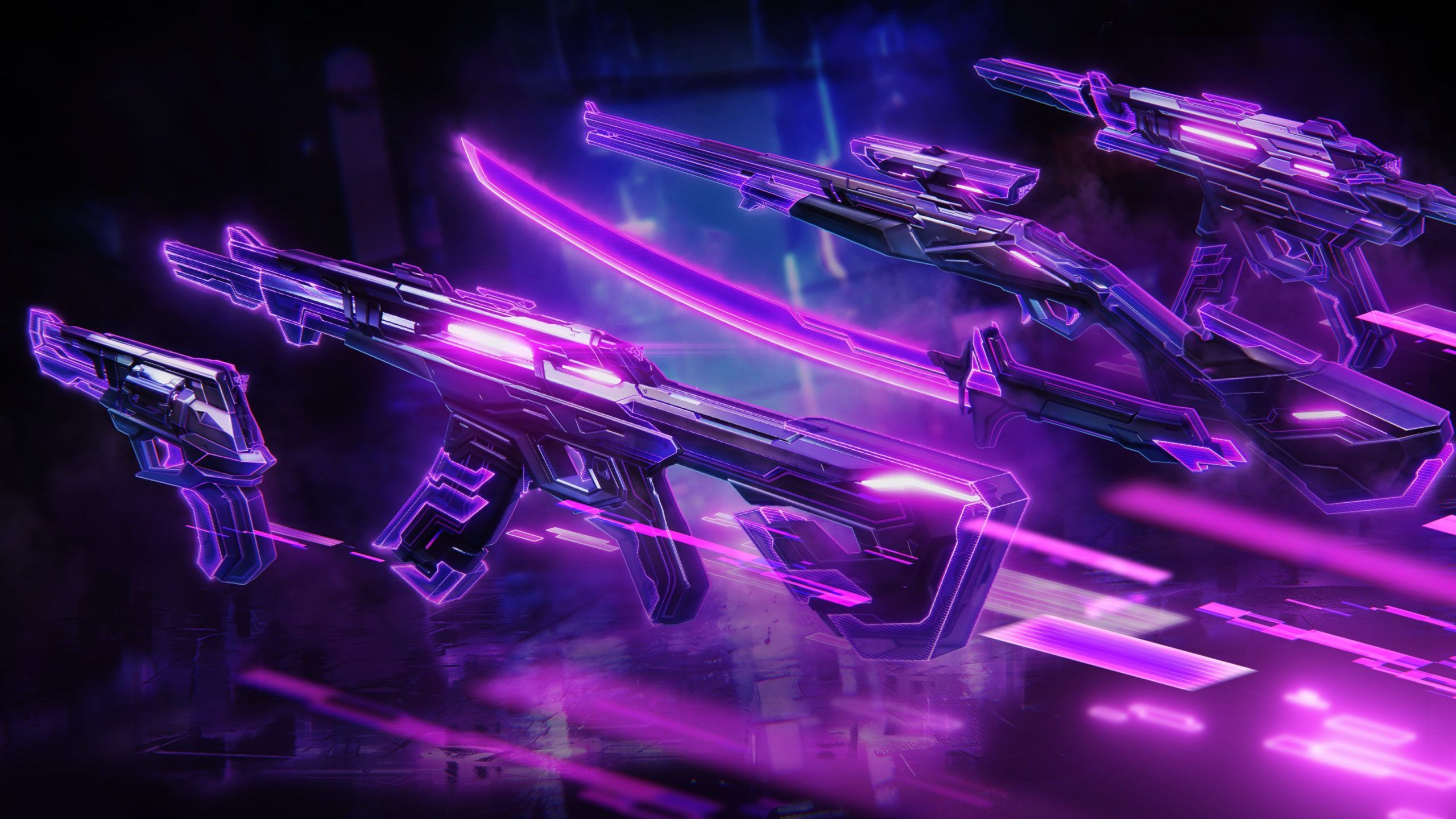
Same publisher, same premium currency, very different rules — and the differences explain most of the complaints from players moving between them.
If you have spent years buying League skins, Valorant's store looks familiar and behaves differently. Same publisher, same premium currency model, very different rules — and the differences explain a lot of the complaints you see from players moving between the two.
1,348 skins, five tiers
The Valorant skin database currently lists 1,348 weapon skins, sorted into five content tiers: Select (411), Deluxe (298), Premium (163), Exclusive (469) and Ultra (24).
The tier is not decoration. It sets the price band and it determines how much the skin does. Higher tiers add variants — recolours unlocked with Radianite Points — and upgrade levels that layer on new audio, animations and finishers. A Select skin is a reskin. An Ultra is closer to a piece of content.
That is the first structural difference from League, where a skin's tier describes its production value but every skin is functionally the same purchase.
The distribution is not even
Skins are not spread evenly across weapons, and the imbalance follows use. The Vandal has 104 and the Phantom 103 — the two rifles that decide most rounds. The Classic, which everyone owns from the first round of every game, has 198. Melee sits at 174.
At the other end, the Bandit has 7 and the Outlaw 22.
For a League player this is the equivalent of champion skin counts, and it works the same way: the things people look at most get the most product. The difference is that in Valorant you are looking at your own gun for the entire match, which is why rifle and knife skins carry the pricing they do.
The rule that changes everything
Valorant skins cannot be traded or sold. They are bound to the account that bought them, so there is no market price — only the store price at release.
That single rule is the biggest divergence from CS2 and it has real consequences for how the store feels. There is no resale value, no investment case, no "it will be worth more later". A skin is a purchase, full stop.
It also removes the mechanism that makes prices in other shooters legible. In a tradeable economy, the market tells you what something is worth. Here, the only signal is what Riot charged, and Riot does not publish bundle prices in any public data.
The bundle question
Bundles are where the pricing gets hard to read. Because Riot does not publish bundle prices, the only way to assess one is to add up what its contents would cost bought individually at the published tier prices, and compare that against what the store is asking.
Do that across the 81 bundles with enough priced items to compare and the average separate-purchase value is 6,154 VP. The heaviest sit at 9,900 VP for five items — Radiant Entertainment System, Phaseguard, Elderflame, ORA by OneTap and Evori Dreamwings all land there.
The obvious caveat is worth stating: a high separate-purchase total means the set is expensive to assemble, not that it is good value. A bundle full of weapons you never pick up is poor value at any discount. The useful read is narrower — whether the bundle contains the one or two guns you actually use.
What League players get wrong
Two habits transfer badly.
Waiting for a sale. Valorant's discount mechanism is the Night Market, which is randomised per player, excludes melee skins and the highest tiers, and draws only from skins you do not already own. You cannot wait for a specific skin to be discounted, because that is not how the mechanism works.
Treating the purchase as an asset. In League that instinct is harmless. In a shooter with a visible trading economy next door, it leads people to believe Valorant skins hold value. They do not, by design, and knowing that before you spend is worth more than any pricing analysis.
More from the LOLValue blog
LoL account value calculator · LoL skins database · LoL MMR checker · Wasted on LoL · Riot Points to USD
LoLValue isn't endorsed by Riot Games and doesn't reflect the views or opinions of Riot Games or anyone officially involved in producing or managing Riot Games properties. Riot Games, and all associated properties are trademarks or registered trademarks of Riot Games, Inc.