What Gaming Rewards Are Actually Worth Your Time
By LOLValue Team · February 25, 2026
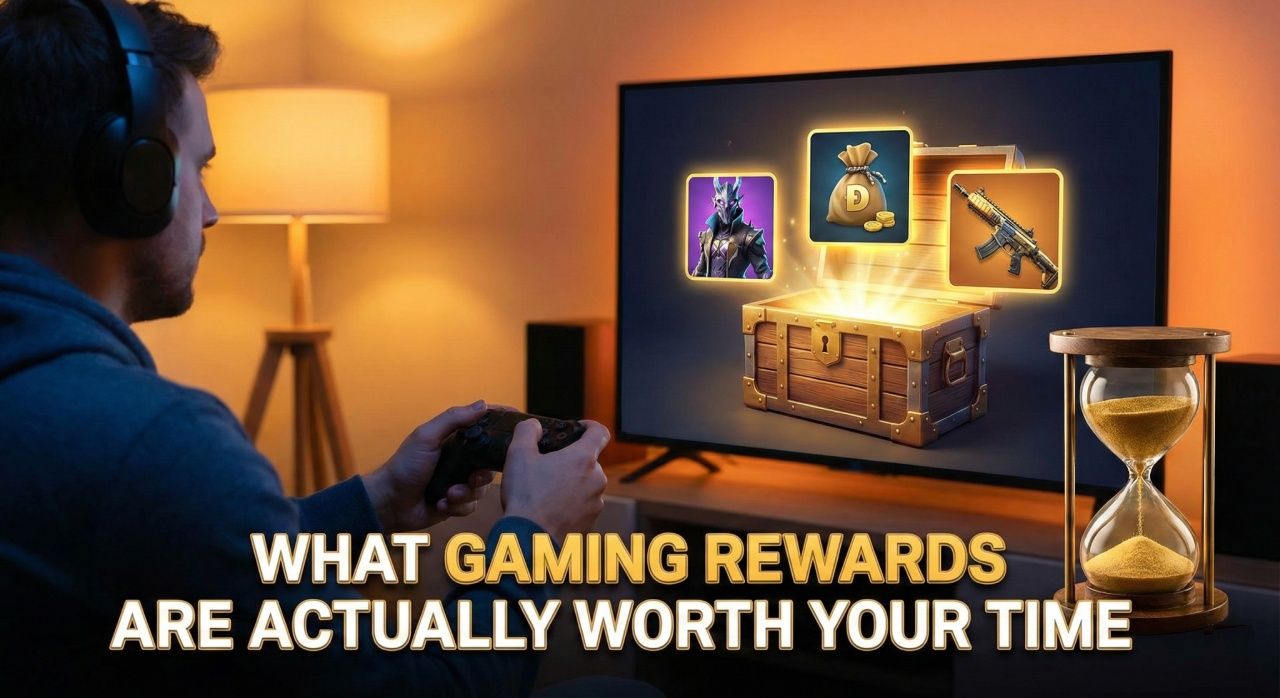
Gaming rewards have become part of almost every corner of play. Whether you're grinding a battle pass, clearing daily missions, or jumping into something like free slots, where the game itself is the draw and the bonus is genuinely just that, a bonus; rewards are baked into modern gaming at every level.
That's mostly a good thing. But it also means that 'get rewarded' language has become an easy vehicle for the kind of offer you want nothing to do with. The Federal Trade Commission says that in 2024, consumers reported losing $470 million to scams that started with text messages. That number matters here because a lot of 'get rewarded' offers arrive exactly that way: a random message, a link, a promise, and a nudge to act fast.
So let's keep this positive and practical. We'll look at what legitimate rewards usually are (and what they're not), a simple safety filter you can use in seconds, and a quick note on online slots promos so the word 'bonus' doesn't trip you up.
Free Skins and Not Free Money
If you've been around League of Legends for any length of time, you already understand the basic trade: your time and attention for entertainment. Rewards programs try to add a small perk on top of that, but the important word is small.
A helpful way to stay grounded is to look at the economics behind why these offers exist at all. Sensor Tower's 'State of Mobile Gaming Report for 2025' says global mobile gaming in-app purchase revenue climbed to $82 billion in 2024, a 4% year-over-year increase. That's a huge pool of money chasing player attention, which is why you see so many incentives, surveys, offerwalls, and 'earn' mechanics floating around games and gaming communities.
Treat rewards like you'd treat a free chest drop or a small discount, not a second job. If a program genuinely fits around the play you already do, great. If it forces you to play in a way you don't even enjoy, the 'reward' is basically buying your time at a bad rate.
One more detail from the same Sensor Tower release helps explain why reward-style mechanics have become so common. Games using a hybrid monetization approach (meaning they earn from both in-app purchases and advertising) saw 37% growth in in-app purchase revenue year-over-year. When ads and purchases live side by side, there's a natural incentive to design funnels that keep you engaged, clicking, and returning.
That means the cleanest programs are the ones that stay transparent about what they want from you and what you get back.
If You Have to Pay to Get Paid, Walk Away
Now for the part that keeps you safe without turning you into a suspicious person.
The FTC has been blunt about a specific scam pattern that matters to gamers because it often feels like a game. In its Data Spotlight titled 'Paying to get paid: gamified job scams drive record losses', the FTC says reported losses to job scams were $223 million through June 2024. In that same spotlight, the FTC describes 'task scams' as gamified job scams driving the trend, with about 20,000 people reporting these scams in the first half of 2024 compared to about 5,000 in all of 2023.
The key pattern is simple: you do tasks, you see a balance grow, you might even get a small payout, then you're told you must send money to keep going or to withdraw. That's the moment to stop.
It's worth saying out loud because people feel embarrassed about it later, and they shouldn't. These flows are designed to feel rewarding, familiar, and 'earned' in the same way a battle pass or ranked climb feels earned. As someone who's watched friends get pulled into sketchy offers: when a system is designed well, it can make smart people feel temporarily careless. The fix isn't shame; it's a rule you follow every time.
Here's a single checklist you can keep in your head before you click anything promising rewards:
- If you have to deposit money to unlock earnings or withdraw, it matches the FTC's 'paying to get paid' task-scam pattern; close it out.
- If the offer arrives via an unsolicited text, slow down, because the FTC says 2024 text-started scam losses totalled $470 million, and bogus job opportunities including task scams were among the commonly reported types.
- If the pitch keeps escalating urgency or tries to move you into group chats to 'prove' it works, treat that as a manipulation tactic, not social proof; the FTC notes scammers may invite targets to group chats when they hesitate to deposit money.
- If crypto is pushed as the payment method, treat that as a major risk marker; the FTC notes crypto is the currency of choice for these task scams and reports job-scam crypto losses of about $41 million in the first half of 2024.
- If you can't explain, in one plain sentence, who pays you and why, you don't have enough clarity yet; take a pass until you do.
Once you have that filter, something useful happens. You don't have to debate every offer. You just check for the few patterns that matter and move on with your day.
And that sets up the final piece: real promotions that aren't scams still deserve careful reading, especially when 'bonus' language is involved.
Bonus Words With Real Rules
Promotions are designed to feel frictionless. In gaming, that might be 'free gems' for installing an app. In online gambling, it might be a deposit match or free spins. The common thread is that the marketing language is simple, and the terms rarely are.
A good anchor here is responsible play messaging that focuses on tools and advice for consumers. The American Gaming Association has promoted 'Play Smart from the Start' as responsible gaming messaging aimed at giving consumers tips, tools, and advice. You don't have to be anti-slots to benefit from that framing; you just treat promos as conditions you evaluate, not rewards you automatically accept.
If you do ever dip into online slots, one technical truth helps keep expectations realistic. A mainstream casino explainer describes online casino outcomes as driven by an RNG, a pseudo-random number generator that produces results continuously, and the point of regulation and testing is to ensure fair randomness rather than anything a player can time or influence. That's a different mental model than League, where learning and decision-making change outcomes over time.
So when you see the word 'bonus', ask yourself one clean question: are you reading it like a gift, or like a contract with conditions?
Make Rewards a Perk and Not a Problem
First, reward offers are everywhere because the money and attention in gaming are enormous; Sensor Tower pegs mobile game in-app purchase revenue at $82 billion in 2024 and notes strong growth in hybrid monetization models. Second, the safest personal rule is also the easiest to follow: never pay to get paid, because the FTC's 'gamified job scam' spotlight shows how task scams turn 'earnings' into a trap, with $223 million in reported job-scam losses through June 2024 and reports surging to about 20,000 in the first half of that year. Third, promos that are legitimate marketing still deserve adult-level reading, especially in chance-based contexts like slots, where RNG-driven outcomes mean the 'bonus' is about terms, not skill.
A forward-looking thought, grounded in the same data: as mobile gaming engagement and monetization keep trending upward, offers will keep getting more polished and more 'game-like'. Your advantage is that you don't need to outsmart every pitch; you just need a few consistent rules.
Pick one transparent rewards option that fits the play you already love, keep your permissions and payments tight, and ignore the rest.
More from the LOLValue blog
LoL account value calculator · LoL skins database · LoL MMR checker · Wasted on LoL · Riot Points to USD
LoLValue isn't endorsed by Riot Games and doesn't reflect the views or opinions of Riot Games or anyone officially involved in producing or managing Riot Games properties. Riot Games, and all associated properties are trademarks or registered trademarks of Riot Games, Inc.