How Pros Build a Chess Practice Routine Between Tournaments (And What Amateurs Can Copy)
By LOLValue Team · October 26, 2026
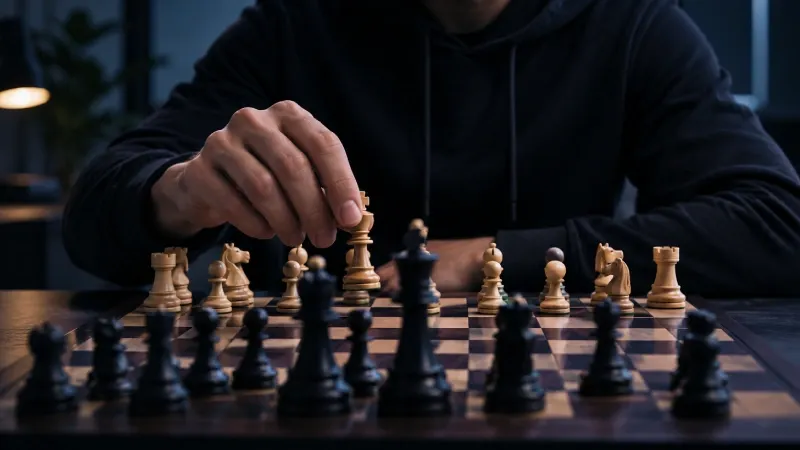
Elite chess players do not just show up and play. Between events they run a training cycle that looks a lot like a professional esports team's practice week: preparation, sparring, drills and review, repeated on a loop. Most amateurs and casual gamers skip that structure entirely, even though none of it needs a coach or an entry fee. Here is what a professional chess practice routine looks like, and which parts are worth copying.
Opening preparation starts long before round one
Top players do not improvise the first ten moves. Uzbek grandmaster Javokhir Sindarov said his team "prepared many opening lines and ideas" ahead of a recent World Championship match, and that the group got lucky "guessing" what his opponents would choose. World Rapid Champion Volodar Murzin described a similar routine before his own title run, saying he "studied openings" alongside his coach, Mikhail Kobalia. Players build a repertoire against specific opponents, then refine it with a database and an engine instead of relearning the same lines from scratch every event.
Sparring against the right opponent
Preparation only holds up if someone tests it first. Murzin said he "played practice games" with his coach before his tournament, and Sindarov described training that happens in groups, calling the format "fun and competitive." The common thread is that both players sparred against opponents chosen for the job, not just whoever happened to be free.
Amateurs rarely have a coach to arrange that kind of matchup, but the idea travels well. Practice platforms now let you pick the opponent instead of taking whoever is online. One example is www.chessiverse.com, where bots come with distinct playstyles and opening choices, so a player can rehearse against a specific kind of opponent rather than one flawless engine on a single difficulty setting.
Tactics drills sharpen pattern recognition
Sindarov trains with a coach who "gives puzzles and exercises" every session, and he added that "time passes very quickly" during that work. Vaishali Rameshbabu described a similar habit, saying she can "work for hours solving studies and solving positions." Neither description involves memorizing a textbook. It is short, repeated pattern work, the chess version of an esports player running the same drill daily instead of once a month. For amateurs, ten focused puzzles a day, done consistently, fit that pattern better than an occasional weekend binge.
Reviewing games beats playing more of them
Research backs the instinct that study time matters more than raw game count. A 2020 review in Frontiers in Psychology covered decades of expertise research. It found that structured practice explained close to a quarter of the skill difference among the game players studied. The review also pointed to earlier chess research showing that solitary study time was the strongest predictor of tournament results.
Competitive esports programs build the same habit into their calendar. Michigan State University's varsity esports teams run "multiple practices, film review and matches in a week," treating film study as its own scheduled activity rather than an afterthought. For a club chess player, that means looking back over a lost game before starting the next one, not just queuing up another match.
Conditioning, sleep, and the habits worth copying
Preparation does not stop at the board. Murzin adjusted his sleep and work hours around competition time zones, since the rounds he was playing "started at 10:00 PM Moscow time." Sindarov was blunt about the limits of pure grinding: train eight hours a day without a break, he said, and "you burn out," adding that his team tries to "balance it well" instead.
None of this requires a title or a federation card to copy:
- Structure practice into short, regular sessions.
- Play opponents near your own level, so the games teach you something instead of just wearing you down.
- Review the losses instead of rushing past them.
- Protect sleep before anything that matters.
Pros do not train on talent alone. They train on a plan, and the plan is free to borrow.
More from the LOLValue blog
- Worlds and MSI Viewer Habits: Why Fans Watch With More Than One Tab Open
- What Do Hextech Loot Boxes and Sweepstakes Actually Have in Common?
- How to Calculate Expected Value (EV) on In-Game Hextech Loot Boxes
- How Mythic+ Rating Is Calculated and Why It Stalls
- Star Citizen 4.10.2 Stanton Event Guide - How to Start, Mission Types and Reward Track
LoL account value calculator · LoL skins database · LoL MMR checker · Wasted on LoL · Riot Points to USD
LoLValue isn't endorsed by Riot Games and doesn't reflect the views or opinions of Riot Games or anyone officially involved in producing or managing Riot Games properties. Riot Games, and all associated properties are trademarks or registered trademarks of Riot Games, Inc.